
- SP
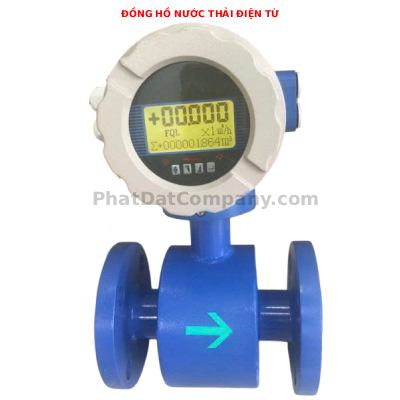


Installing an Electromagnetic flow meter for wastewater to measure wastewater flow will reduce the cost that businesses have to pay to industrial parks when calculating 80% of input water. This is an issue that many customers in industrial parks have responded to our company's sales staff.
Introduction Electromagnetic flow meter for wastewater
An electromagnetic flow meter for wastewater is a type of velocity or volumetric flow meter that operates on Faraday’s law of electromagnetic induction, which states that a voltage will be generated when a conductor moves through a magnetic field. Electronic wastewater flow meters can only detect the flow of electrically conductive liquids. Early magnetic flow meter designs required a minimum liquid conductivity of 1-5 microsiemens per centimeter to operate. Newer designs have reduced that requirement to approximately 0.05 to 0.1 times that.
An electromagnetic flow meter for wastewater consists of a non-magnetic tube lined with insulating material. A pair of magnetic coils are placed as shown in Figure 1 and a pair of electrodes penetrate the tube and the tube lining.
If a conductive liquid flows through a pipe of diameter (D) through a magnetic field density (B) generated by the coils, the amount of voltage (E) developed across the electrodes - as predicted by Faraday's law - will be proportional to the velocity (V) of the liquid. Since the magnetic field density and the pipe diameter are fixed values, they can be combined into a calibration factor (K) and the equation is simplified to:
E = KV
The difference in velocity at different points of the flow profile is compensated by a signal weighting factor. Compensation is also achieved by shaping the magnetic coils so that the magnetic flux will be greatest where the signal weighting factor is lowest and vice versa.
Manufacturers determine the K factor of each electronic wastewater flow meter by calibrating the water of each flow tube. The K value thus obtained is valid for any other conductive liquid and is linear over the entire flow meter range.
Electromagnetic flow meter for wastewater construction
Body, Liner and Electrode Probe
The body of an electronic wastewater flow meter consists of two face-to-face flanges on both sides. The body and inner lining are available in a wide range of materials and are widely used in all process industries, including food, pharmaceutical, mining and metalworking.
Some lining materials (especially PFA) can be damaged by using a pry bar during installation or removal from a pipe. They can also be damaged by over-tightening the flange bolts. A liner protector should be available to help prevent such damage.
Electrode
In conventional flow pipes, the electrodes are in contact with the water.
In this design, the magnetic meter electrodes are placed at the bottom of the pipe (at about 1/10 of the pipe diameter) so that they remain covered by water. There is a compensation mode for wave effects and a calibration mode is provided for full pipe, no flow (static level) and partially full pipe operation.
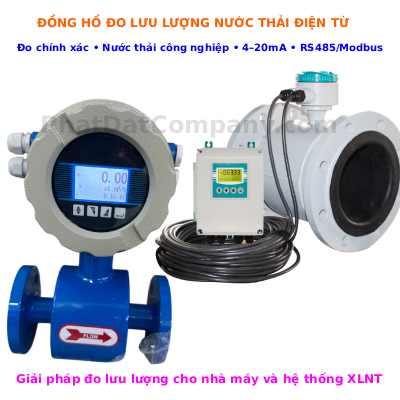
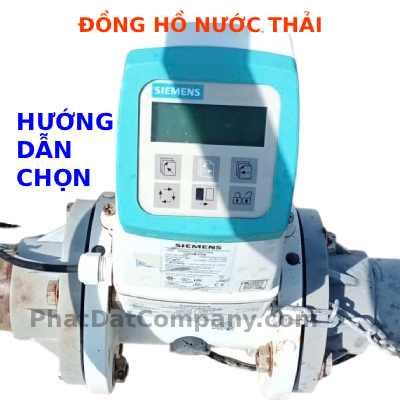
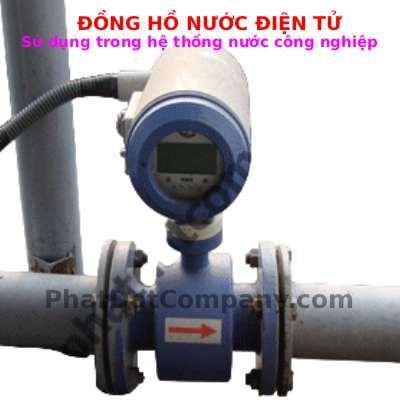
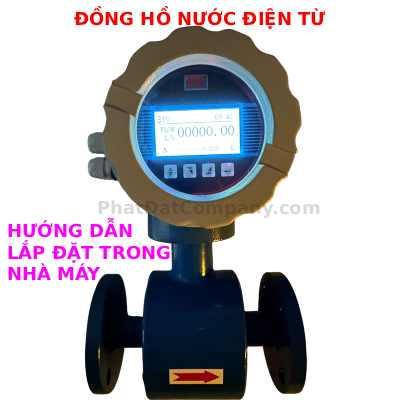
There are 2 types of electronic wastewater flow meters. Compact type and Remote type
Advantages of Using Electromagnetic flow meter for wastewater
Electromagnetic flow meter for wastewater are beneficial to companies in municipal, agricultural, oil and gas, and other industrial applications. These meters help companies operate at their most optimal level.
High Accuracy
Electronic wastewater flow meters are highly accurate when compared to other flow meters. Accuracy over a wide flow range is estimated to be ±0.5 percent of flow or better, compared to an inaccuracy of ±1 to 2 percent of flow for ultrasonic meters.
Accuracy is everything when measuring water solutions, as it leads to lower costs and high efficiency.
Cost Savings
Electronic wastewater flow meters are a cost-effective solution for several reasons:
By producing extremely accurate measurements, electronic wastewater flow meters help reduce excess costs.
Inaccurate measurements produced by other flow meters can result in more product being sold than paid for or, conversely, too little product being sent, resulting in late fees, poor reputations and extra shipments.
Installation is simple and easy. Electronic wastewater flow meters can be retrofitted into existing systems and installed without diverting flow or shutting down the system.
Finally, the lack of moving parts on electronic wastewater flow meters means they are virtually maintenance free. Once installed and running, electronic wastewater flow meters will continue to measure without any additional costs being incurred.
Disadvantages of using electromagnetic flow meter for wastewater
Electromagnetic flow meter for wastewater do not work on non-conductive liquids such as oil, steam or gas, differential pressure flow meters should be used here.
Electronic wastewater flow meters cannot distinguish between entrained air and water in the pipeline; therefore, air bubbles will cause the Electronic Wastewater Flow Meter to read high. If the entrained air is not uniformly dispersed but in the form of large air clumps or bubbles (the size of the electrode), this will cause the output signal to be noisy or even disrupt the signal.
Electrode coating is another common problem of Electronic Wastewater Flow Meters. Material accumulated on the inner surface of the Electronic Wastewater Flow Meter can isolate the electrode from the water in the pipeline. This can cause signal loss or measurement errors. Of course, the best solution is prevention.
Another prevention method is to use electrodes that protrude into the flow to take advantage of the turbulence effect and wash the electrode.
Differences between Electromagnetic flow meter for wastewater and Mechanical Wastewater Flow Meters
Different in price. Mechanical wastewater flow meters are much cheaper than electronic wastewater flow meters
Different in accuracy. Mechanical wastewater flow meters have an error of 3-5%, higher than electronic wastewater flow meters of 0.5%
Different in durability. Mechanical wastewater flow meters are much less durable than electronic wastewater flow meters. After a period of operation, the inside of the mechanical wastewater flow meter is corroded, leading to quick damage. On the contrary, electronic wastewater flow meters have a PTFE lining inside, protecting the electrode probe, so they are very durable. Mechanical meters soaked in wastewater for a short time will be damaged. Electronic wastewater flow meters can be soaked in wastewater without worry, you guys.
Different in application. Electronic wastewater flow meters are specialized for wastewater, wastewater with a lot of dirt, garbage, fabric fibers, wastewater with corrosive chemicals. On the contrary, mechanical wastewater meters are only used for treated wastewater and have very few impurities. In some locations, the wastewater temperature is above 100 degrees Celsius, the only choice is an electronic wastewater flow meter. Application at this high temperature is not suitable for mechanical flow meters.
Different installation locations. Depending on the regulations of each Industrial Park Management Board. If they require the installation of mechanical wastewater flow meters, you can buy this type of meter to save costs for the factory. However, there are industrial parks that require the installation of electronic wastewater flow meters, so you should buy according to their requirements.
Applications of Electromagnetic flow meter for wastewater
Electronic wastewater flow meters are installed at a location in an industrial area. Common industries that use electromagnetic flow meters include:
Agriculture and Irrigation
Accurate water flow measurement is crucial in agriculture and irrigation, especially when there are harsh or changing climates.
Choosing a magnetic flow meter for irrigation flow measurement is a low maintenance option that meets industry standards and has been trusted for decades.
Wastewater
High uptime is crucial when managing wastewater. Electronic wastewater flow meters are excellent in this case, as maintenance and repairs are rare and installation does not create significant downtime.
High quality flow meters will also operate in extreme temperatures, so the climate will not cause downtime.
Drinking Water
Cost management is a top priority for drinking water treatment companies. Electronic water flow meters optimize flow control and cut costs by keeping readings as accurate as possible. They can also achieve NSF-61 certification, ensuring safety for drinking water applications.
Cooling Water
Cooling water is an extremely important component for the power, industrial, and manufacturing industries. Electromagnetic water flow meters meet industry requirements for accuracy and meet operator expectations for durability.
Industrial
Industrial applications often require instruments that are durable and can withstand high pressures.
High-quality electronic flow meters withstand industrial use, require minimal maintenance, and qualify for hazardous area classification, making them a favorite choice for engineers in the industrial sector.
How to Choose an Electronic Wastewater Flow Meter
There are a few things to consider when choosing an electronic wastewater flow meter:
Cost: Electronic wastewater flow meters come in a wide range of prices, but generally, the more you spend, the more accurate they are. That accuracy will pay dividends in the years to come.
Application: The type of fluid, fluid temperature, flow range, and pressure will help determine which type of electromagnetic flow meter will work best.
Accuracy and Range: Some meters can provide more accuracy than others. Make sure you choose a meter that provides the level of accuracy needed for your business. The flow drop or flow range of the meter is another important consideration when choosing an electronic wastewater flow meter.
Ease of Installation: The best electronic wastewater flow meter for each project will vary depending on the size and location of the pipe. For example, a flange-mounted meter may work best with smaller sized pipes, while an insert-mounted meter may be a cost-effective choice for larger projects.
Question 1: What are the factors to consider when selecting an electronic wastewater flow meter?
Water flow to be measured? Maximum flow, Minimum flow?
Maximum working pressure?
Maximum temperature, Minimum temperature?
The water flow to be measured must be conductive, with a conductivity of > 5μS/cm.
Confirm whether there is negative pressure in the pipe.
Question 2: How accurate is the electronic wastewater flow meter?
The accuracy of the electronic wastewater flow meter is +- 0.25 to 0.5 %
Question 3: What is the lowest flow rate of the electronic wastewater flow meter measured?
The lower limit of the flow meter is 0.5m/s. It is not recommended to use the electronic wastewater flow meter below this value
Question 4: How long does the battery-powered electronic wastewater flow meter work?
The battery-powered electronic wastewater flow meter can generally work for 5~6 years by default in the standard environment. However, the humidity and temperature at the installation site may affect the power supply time.
Question 5: Does the electronic wastewater flow meter support a pressure signal converter or a temperature signal converter?
The electronic wastewater flow meter with a pressure detection connector can be used with a pressure signal converter. The pressure value can be read directly on the display of the flow meter.
Temperature measurement requires an external method. If a temperature signal converter is used, disturbances will occur, affecting the flow field.
Question 6: Is there an explosion-proof electronic wastewater flow meter?
Only the Compact integrated electromagnetic flow meter has an explosion-proof version. The Remote type does not meet the explosion-proof requirements.
Where to buy electromagnetic flow meter for wastewater?
You can view the product and buy it directly at Phat Dat Company office. Address: 41F/96/18 Dang Thuy Tram Street, Ward 13, Binh Thanh District, HCM.
If you live far away, Phat Dat can deliver the electronic wastewater flow meter by bus, Viettel.
Support to answer questions about installation and technical parameters of the Electromagnetic flow meter for wastewater.
You can contact 24/7 at Hotline Phat Dat Company. E-mail: info@phatdatcompany.com
PHAT DAT TRADING ENGINEERING SERVICE COMPANY