
- SP
Linear control valve,linear valve,linear control ball valve,linear control butterfly valve,pneumatic control valve,pneumatic control valve,pressure reducing and de-superheating station
Application of Linear Control Valves Installed in Pressure Reducing and Desuperheating Stations
What is a Pressure Reducing and Desuperheating Station?
Most modern boilers produce steam at high pressure and temperature. High pressure steam has a smaller volume than atmospheric pressure steam, thus resulting in smaller boiler sizes and smaller steam pipe diameters. In addition, high temperature (superheated) steam has more energy, which increases the efficiency of power-generating steam turbines.
On the other hand, all process industries use low pressure saturated steam at low temperature, mainly due to the following reasons: Saturated steam has the highest heat transfer efficiency.
Lower pressure and temperature result in thinner pipes, lighter flanges and cheaper materials, thus significantly reducing the initial cost of the plant.
In any industry, steam is required at different locations, but the steam pressure and temperature required at each location will vary depending on the application. Therefore, high pressure superheated steam is generated at a central location (boiler), distributed to different locations in the plant through a steam piping network, and then reduced to operating pressure and temperature just upstream of the points of use.
A pressure reducing and desuperheating station is a modular steam treatment equipment that reduces the steam pressure and temperature at the point of use, and can be installed directly into your existing steam network.
Some applications of pressure reducing and desuperheating stations are listed below:
1) Pressure reducing and desuperheating stations for system heating/cooling applications in sugar, food, textile, paper, etc. factories.
2) Deaerator
3) Turbine Bypass Desuperheating and Pressure Reducing Station
Accessories of the Desuperheating and Pressure Reducing Station include:
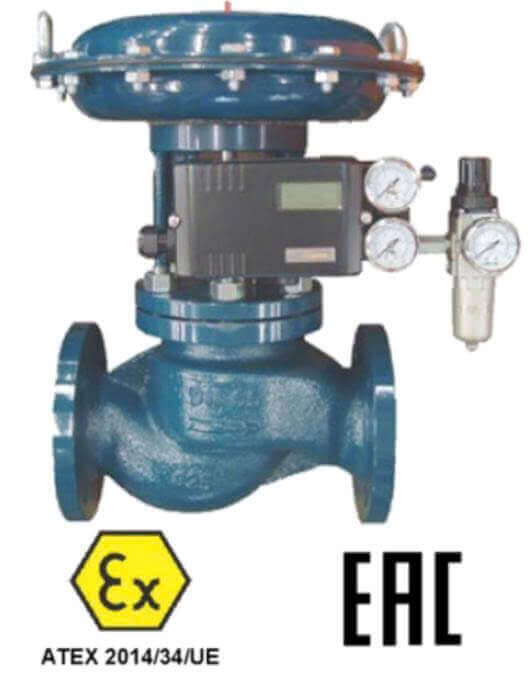
Pressure Control Valve: Also known as Pressure Reducing Valve or Pressure Control Valve. The Pressure Control Valve is the main component of the Desuperheating and Pressure Reducing System. This valve is used to reduce the pressure of the superheated steam.
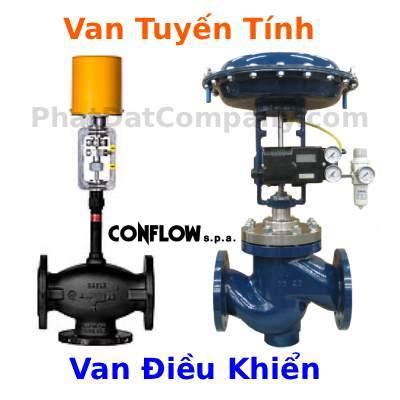
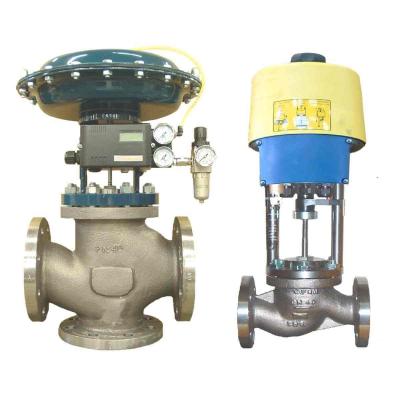
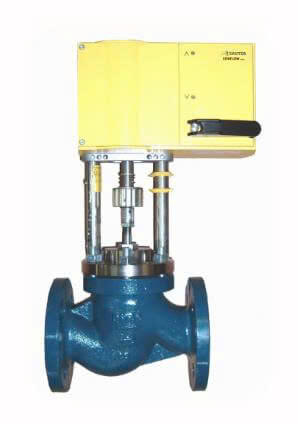
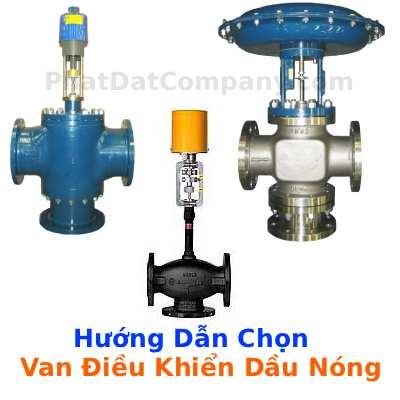
Generally, the Linear Control Valve is called the Final Control Element. And it is the heart of the Measuring Loop.
What is a Linear Control Valve? The structure and working principle of the linear valve. You can see here.
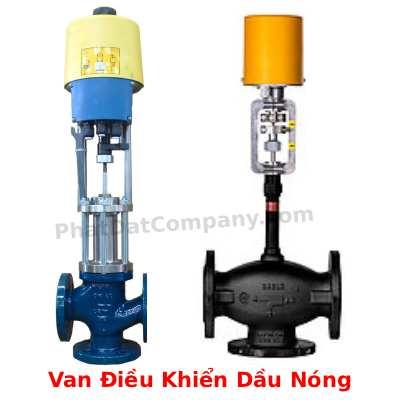
Linear Control Valve
Linear Control Valve
Temperature Control Valve: also known as the Heater or Thermostat. This part reduces the temperature of the superheated steam and includes Flow Nozzles, through which water is sprayed into the steam to reduce the temperature.
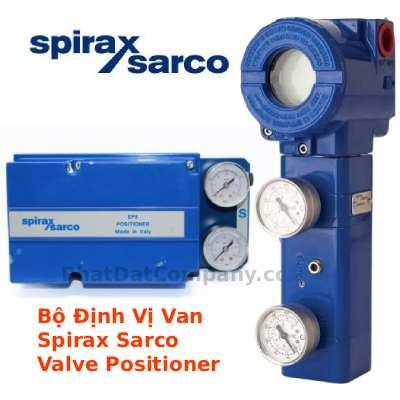
Positioner: The positioner in the Linear Control Valve is a device that communicates with the PID controller and senses the precise position of the linear control valve body.
PT100 or TC Temperature Sensor
Pressure Gauge: displays the pressure of the fluid flowing through the pipeline.
Pressure Sensor: This pressure transmitter transmits the pressure value as a 4-20mA signal (measured value) to the pressure controller.
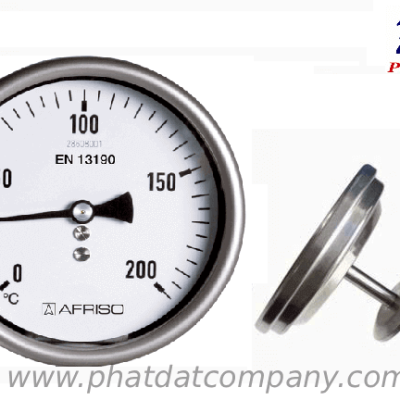
Temperature Gauge: displays the temperature of the fluid flowing through the pipeline.
Isolation Valve: These valves are installed before and after the linear control valve to isolate the fluid flow when the linear control valve is under maintenance.
Safety Valve: The safety valve in the system protects the entire system. When the pressure exceeds the preset limit, the valve will open the valve body and discharge the excess pressure to the atmosphere.
The safety valve is the most essential component in high pressure operation.
Working principle of Pressure Reducing and Desuperheating Station
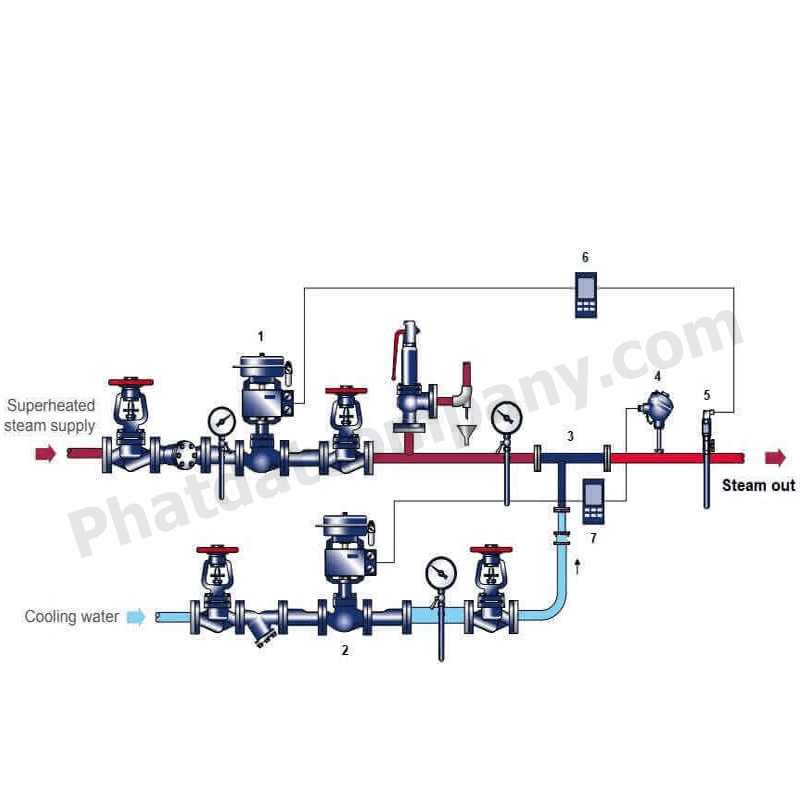
High-pressure, high-temperature steam enters the pressure reducing and desuperheating station as shown in the figure. The steam pressure control valve (1) reduces the steam pressure.
The water flow control valve (2) regulates the amount of water sprayed into the nozzles.
The desuperheater (3) lowers the outlet steam temperature by spraying very fine mist water into the steam stream. The pressure sensor (5) and temperature sensor (4) sense the steam pressure and outlet temperature respectively and send signals to the PID controller (6 and 7).
The PID controller then compares the measured value with the set value and generates a signal, which is sent to the positioner of the steam pressure control valve (1) and the water flow control valve (2).
The linear control valve is installed in the pressure reducing and desuperheating station
Super good price pressure gauge. You can see here
Super good price pressure sensor. You can see here
Good price temperature sensor. You can see here
The above article gives an example of a linear control valve installed in factories using boilers.
Phat Dat Company specializes in supplying and installing all kinds of linear control valves.
Contact phone number 02835531725, or email: info@phatdatcompany.com
Thank you for reading the article.
If you need any comments or additions, please contact us.

PHAT DAT TRADING ENGINEERING SERVICE COMPANY