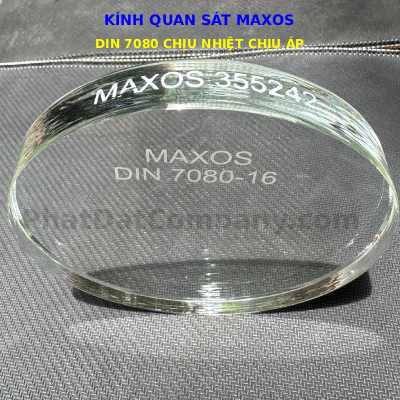
MAXOS Sight Glass for Industrial Use – Heat-Resistant and High-Pressure Resistant
What is a MAXOS sight glass?
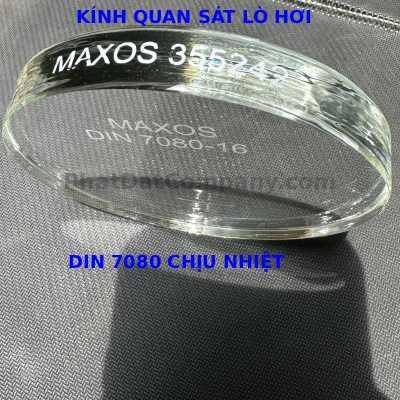
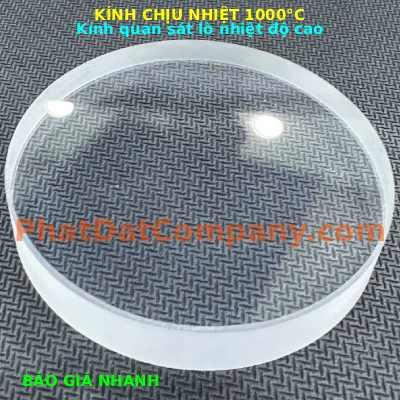
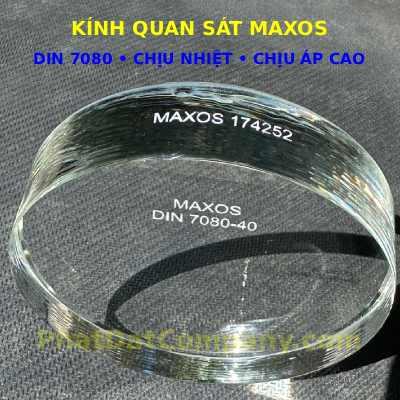
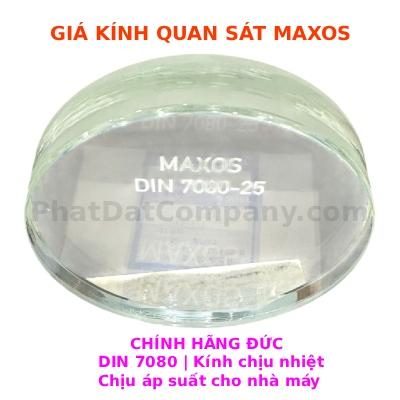
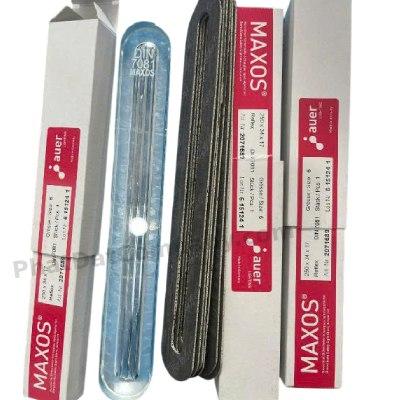
A MAXOS sight glass is a type of industrial sight glass designed to withstand high temperatures and high pressures, manufactured by Auer Lighting (Germany). These products are crafted from high-quality borosilicate glass and engineered in accordance with industrial standards—such as DIN 7080 (for circular sight glasses) and DIN 7081 (for gauge glasses). They allow operators to directly observe the media inside equipment while maintaining a secure seal and ensuring safety under demanding operating conditions.

MAXOS borosilicate sight glasses are heat-resistant and pressure-resistant, designed for use in boilers, pressure vessels, and various industrial systems.
Unlike standard glass, MAXOS sight glass is engineered for demanding environments characterized by high temperatures, high pressures, saturated steam, heat-transfer oils, chemicals, compressed gases, and various other industrial fluids. Renowned for its exceptional resistance to thermal shock and chemical exposure, as well as its long-term optical clarity, MAXOS has become the preferred choice for equipment manufacturers and industrial facilities worldwide.
Depending on the specific application, MAXOS sight glass is utilized in a wide range of equipment, including:
Industrial boilers and steam generators.
Pressure vessels and storage tanks.
Chemical reactors.
Pipelines and sight flow indicators.
Food and beverage processing equipment.
Pharmaceutical manufacturing equipment.
Facilities in the pulp and paper, cement, thermal power, and oil and gas sectors, among many other production lines.
What sets MAXOS apart is not only its borosilicate composition but also its specialized tempering process and precision machining. These features enhance the glass's ability to withstand mechanical and thermal stress, significantly reducing the risk of cracking or breakage when operated within its design specifications.
In Vietnam, MAXOS sight glass is widely employed in industrial plants that demand high levels of safety and reliability. Selecting the correct type, size, and technical standard for the sight glass not only ensures clear visibility of the media within the equipment but also improves operational efficiency, minimizes maintenance time, and mitigates the risk of unplanned downtime.
Insights from Phat Dat: Through our experience consulting for various industrial facilities, we have observed that sight glass failures are rarely due to the quality of the glass itself; rather, they typically stem from the selection of incorrect specifications or dimensions, or from improper installation. Therefore, before deciding on a replacement, engineers must clearly determine the applicable standard (DIN 7080 or DIN 7081), dimensions, operating pressure, and system temperature to ensure the correct product is selected.
If you are looking for information on MAXOS heat-resistant sight glasses and need to select the appropriate model for your system, please see the details here: MAXOS Heat-Resistant Sight Glasses → https://phatdatcompany.com/kinh-quan-sat-chiu-nhiet
Why do plant engineers choose MAXOS sight glasses?
In industrial systems—such as boilers, pressure vessels, reactors, steam pipelines, and processes involving chemicals, food, or pharmaceuticals—a sight glass is more than just a component for "looking inside" the equipment. It serves as a vital tool that allows operating engineers to monitor the state of the medium in real-time, detect irregularities early, and take timely corrective action. Consequently, selecting the right type of sight glass has a direct impact on the safety, reliability, and continuity of the production line.
Through years of providing consulting services and equipment to industrial plants, Phat Dat has observed that most customers choose MAXOS sight glasses not only for their German origin but also for their stable performance in high-temperature and high-pressure environments. This product line is the preferred choice for many original equipment manufacturers (OEMs) and maintenance teams when a replacement sight glass—compliant with strict technical standards—is required.
Unlike standard glass, MAXOS sight glass is manufactured from high-quality borosilicate glass, precision-machined, and subjected to a thermal tempering process. As a result, it offers excellent resistance to thermal shock and chemical corrosion, while maintaining long-term clarity when operated within its design specifications.
In practice, many clients reach out to Phat Dat when encountering issues such as:
Sight glass becoming cloudy after a period of operation.
Glass cracking or shattering due to sudden temperature changes within the system.
Difficulty identifying the correct DIN standard for replacement.
Uncertainty regarding whether to choose standard borosilicate glass or MAXOS glass.
An urgent need for replacement glass to resume production line operations.
In such cases, the first step taken by Phat Dat’s technical team is not to provide a quote, but to verify the system’s operating parameters—including temperature, pressure, the medium involved, glass dimensions, DIN standards, and the installation configuration. Only by accurately determining these parameters can we recommend the appropriate type of glass, helping clients minimize risks and avoid the need for repeated replacements.
Practical Insights
Through our work with various industrial plants, we have observed that the failure of sight glass is not always due to the quality of the glass itself. In many instances, cracking or a shortened service life occurs because of:
Selecting the wrong type of glass for the specific operating temperature and pressure.
Installing glass that does not conform to the equipment’s required DIN standard.
Uneven tightening of bolts, causing the glass to be subjected to non-uniform stress.
Continued use of gaskets that have aged or become deformed.
Failure to inspect the flange surface before installing new glass.
Continued operation despite the presence of scratches or chipped edges on the glass. This is why Phat Dat always advises clients to evaluate the full range of operating conditions before replacing sight glasses, rather than basing their choice solely on dimensions or price. A sight glass perfectly suited to the specific application ensures more stable system operation, minimizes downtime, and optimizes maintenance costs throughout the equipment's lifecycle.
In systems operating under high temperature and pressure, the cost of a sight glass is typically negligible compared to the expenses incurred from an emergency production line shutdown for replacement. Therefore, selecting the correct technical specifications from the outset is always the more economical and safer approach.
Why do plant engineers choose MAXOS sight glasses?
In industrial systems—such as boilers, pressure vessels, reactors, steam pipelines, and processes involving chemicals, food, or pharmaceuticals—a sight glass is more than just a window into the equipment. It allows operating engineers to monitor the state of the medium in real-time, detect anomalies early, and take timely corrective action. Consequently, choosing the right type of sight glass directly impacts the safety, reliability, and continuity of the production line.
Through years of providing consulting services and equipment to industrial plants, Phat Dat has observed that clients often choose MAXOS sight glasses not only for their German origin but also for their consistent performance in high-temperature and high-pressure environments. This product line is frequently preferred by original equipment manufacturers (OEMs) and maintenance teams alike when a replacement sight glass that meets precise technical standards is required.
Construction of MAXOS Sight Glasses
To ensure stable performance in environments characterized by high temperatures, high pressures, and corrosive chemicals, MAXOS sight glasses are far more than ordinary glass panes. They are developed, manufactured, and quality-controlled under the rigorous standards of Auer Lighting (Germany), meeting industrial benchmarks such as DIN 7080 and DIN 7081, depending on the specific application.
What sets MAXOS sight glasses apart lies in their material composition, manufacturing processes, and heat-treatment techniques. These factors enable the glass to maintain its transparency, pressure resistance, and thermal shock resistance over long periods, provided it is operated within its design specifications.
1. High-Quality Borosilicate Glass
The core component of MAXOS sight glasses is borosilicate glass—a material widely used in industrial equipment, laboratories, and the pharmaceutical sector due to its exceptional heat and chemical resistance.
Compared to standard soda-lime glass, borosilicate glass offers several distinct advantages:
A low coefficient of thermal expansion, which reduces the risk of cracking or shattering during sudden temperature changes.
High resistance to a wide range of chemicals, including acids, alkalis, and solvents, within specified operational limits.
Long-term retention of transparency.
Minimal deformation when subjected to high temperatures.
Suitability for systems that require continuous observation.
For these reasons, borosilicate glass is the industry-standard material for many types of sight glasses used in industrial plants.
2. Thermal Tempering
Once shaped to the required dimensions, MAXOS glass undergoes a thermal tempering process, which introduces compressive stress to the glass surface.
This process provides several key benefits:
Enhanced pressure resistance. Enhanced resistance to mechanical impact.
Reduced risk of cracking or breakage due to thermal shock.
Extended service life of the glass under continuous operating conditions.
This is one of the key differentiators between MAXOS glass and many lower-cost industrial glass products available on the market.
3. High-precision surface processing
A factor often overlooked—yet one that significantly impacts the service life of the glass—is the precision of the contact surfaces.
MAXOS sight glass features:
Two flat surfaces with a high degree of parallelism.
Carefully finished edges to minimize stress concentration.
Strictly controlled dimensions and tolerances in accordance with manufacturing standards.
Consequently, when used with appropriate gaskets and flanges, the tightening force is distributed evenly, which helps reduce the risk of the glass cracking during operation.
4. Diverse range of sizes per DIN standards
MAXOS offers a wide variety of sizes to meet the requirements of various industrial equipment.
Common standards include:
DIN 7080 – Circular sight glass for observation ports, pressure vessels, and pipelines.
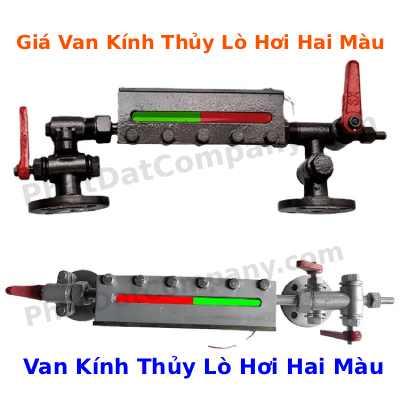
DIN 7081 – Flat gauge glass for boiler water-level indicators and pressure vessels.
Reflex glass.
Transparent glass.
Selecting the correct DIN standard, diameter, thickness, and glass type is crucial for ensuring the safe operation of the system.
5. Integration with gaskets and mounting hardware
In practice, a sight glass is only one component of a complete observation assembly.
A typical sight glass assembly consists of:
MAXOS sight glass.
Heat-resistant gasket.
Flange or retaining frame.
Bolts and nuts.
Protective cover (depending on the design). If any of these components are unsuitable or installed incorrectly, the service life of the sight glass will be significantly reduced, even if the glass itself is of high quality.
Through our experience assisting various factories with the replacement of sight glasses, Phat Dat has observed that many instances of cracking are not caused by product defects, but rather by issues within the assembly itself. Degraded gaskets, warped flanges, or uneven bolt tightening can create localized stress on the glass surface, increasing the risk of failure during operation.
Therefore, when replacing MAXOS sight glasses, we always recommend that customers inspect the condition of the gaskets, flanges, and bolt-tightening torque, rather than simply replacing the glass pane alone. This approach enhances safety and extends the service life of the entire sight glass assembly.
Functions of Individual Components
1. MAXOS Sight Glass
This is the most critical component of the sight glass assembly.
Functions:
Allows for direct observation of the medium inside the equipment.
Withstands high temperatures.
Resists operating pressure.
Withstands exposure to chemicals (within specified limits).
Maintains transparency during operation.
MAXOS sight glasses are made of thermally toughened borosilicate glass, which enhances resistance to mechanical stress and reduces the risk of cracking or breakage when used within the designed operating conditions.
2. Heat-Resistant Gasket
The gasket serves the following purposes:
Creates a seal between the glass and the flange.
Absorbs a portion of mechanical stress.
Compensates for minor irregularities on the mating surfaces.
Prevents leakage of the medium.
The gasket material must be carefully selected to be compatible with the system's temperature, pressure, and the specific medium being contained.
3. Retaining Flange
The flange applies uniform pressure across the entire surface of the glass.
A proper flange must meet the following criteria:
Have a flat surface.
Be free from warping or distortion.
Be free from burrs or deep scratches.
Be machined to precise dimensions in accordance with relevant standards.
If the flange is deformed, the clamping force will be distributed unevenly, significantly increasing the risk of damage to the glass.
4. Bolts and Nuts
Bolts are used to generate the clamping force between the flanges.
During installation, it is essential to:
Tighten the bolts in a star or cross-pattern sequence.
Increase the tightening force in gradual increments.
Avoid tightening one side disproportionately.
Adhere to the tightening torque specifications recommended by the equipment manufacturer.
This factor directly influences the service life of the sight glass. 5. Industrial Media
MAXOS sight glasses are designed for use with a wide range of media, including:
Saturated steam.
Hot water.
Heat transfer oils.
Chemicals.
Solvents.
Industrial gases.
Liquid food products.
Pharmaceuticals.
For each specific medium, engineers must select the appropriate type of glass and gasket, while ensuring the operating conditions are suitable.
In the process of assisting customers with the replacement of sight glasses, Phat Dat has observed many instances where only the glass is replaced, while old gaskets or warped flanges are left in place. After a short period of operation, the new glass often develops cracks or begins to leak.
Therefore, when replacing a MAXOS sight glass, we strongly recommend inspecting the entire assembly—including the glass, gaskets, flanges, and bolts. Replacing all components as a complete set, when necessary, ensures safer system operation, extends the service life of the glass, and reduces long-term maintenance costs.
Operating Principles of MAXOS Sight Glasses
MAXOS sight glasses are designed to allow operators to directly observe the state of the medium inside a piece of equipment without needing to open a cover or shut down the system. Depending on the specific application, MAXOS offers various types of sight glasses, each utilizing a different observation principle to meet the requirements for safety, visibility, and operational conditions within a facility.
The three most common observation principles are the Round Sight Glass, the Transparent sight glass, and the Reflex sight glass. Each type features a unique construction and display mechanism, tailored to specific working environments.
1. Operating Principle of the Round Sight Glass
MAXOS round sight glasses are manufactured in accordance with the DIN 7080 standard and are typically installed on storage tanks, pressure vessels, pipelines, reactors, and sight flow indicators.
Operating Principle
This is the simplest observation principle.
External light passes through a borosilicate glass pane and enters the equipment. Operators can directly observe the medium with the naked eye to monitor:
The color of the fluid.
Flow.
Air bubbles.
Sediment or debris.
Liquid levels (in certain applications).
Reaction processes within a vessel.
Since the glass does not alter the path of the light, the observed image remains highly accurate and true to reality.
Applications
Chemical tanks.
Reactors.
Industrial pipelines.
Food processing equipment.
Pharmaceutical equipment.
Pressure vessels.
Breweries.
Beverage production plants.
2. Operating Principle of the Transparent Sight Glass
Transparent sight glasses (Transparent Level Gauge Glass) are primarily used in liquid level gauges and boilers, where operators need to directly observe the level of water or other liquids inside the equipment. Operating Principle
The glass features two flat, transparent surfaces that allow light to pass through the medium.
When viewed from the outside, the operator can directly observe:
The liquid level.
The color of the medium.
Its clarity or turbidity.
The presence of air bubbles or suspended particles.
In high-pressure steam systems, "transparent" glass is often paired with a protective mica sheet on the side exposed to the steam; this helps reduce surface corrosion of the glass and extends its service life.
Advantages
Allows for accurate observation of the medium's color.
Provides a clear view of the fluid's flow state.
Ideal for colored media or applications requiring visual quality inspection.
3. Operating Principle of Reflex Glass
Reflex glass is designed with prismatic grooves on the side that comes into contact with the medium.
This type of glass is widely used in boiler water-level gauges because it provides a clear indication of the water level without the need for external illumination.
Light Reflection Principle
When the glass surface is in contact with steam, light rays entering the prismatic grooves are reflected entirely back toward the observer.
As a result, the area containing steam appears bright or silvery.
Conversely, when the glass surface is in contact with water or another liquid, the light enters the medium and is refracted rather than reflected.
Consequently, the area containing water appears dark.
The contrast between the bright zone (steam) and the dark zone (water) allows engineers to quickly determine the liquid level, even under less-than-ideal lighting conditions.
Advantages
Easy to observe the water level.
No backlight required.
High contrast.
Suitable for boilers and pressure vessels.
MAXOS sight glass technical specifications
MAXOS sight glasses are manufactured from a special heat-resistant borosilicate glass, meeting stringent European standards for sight-glass equipment used in high-pressure and high-temperature environments. Technical specifications vary depending on the specific application (e.g., circular sight glasses per DIN 7080 or reflex/transparent gauge glasses per DIN 7081).
DIN 7080 – Circular Sight Glass
DIN 7080 is a German standard for circular sight glasses used in:
Boiler observation ports
Chemical reactors
Pressure vessels
Food processing equipment
Pharmaceutical equipment
Oil and gas equipment
Vacuum equipment
Features:
Thermally tempered
High transparency
High-pressure resistance
Chemical corrosion resistance
High mechanical strength
Long service life in industrial environments
DIN 7081 – Boiler Gauge Glass
DIN 7081 applies to:
Reflex gauge glass
Transparent gauge glass
This standard is widely used in:
Boilers
Steam generators
Pressure vessels
Saturated steam systems
Key features:
International standard dimensions
Precise flatness
High-pressure resistance
Continuous heat resistance
Exceptional safety
Operating Temperature
By utilizing Borosilicate Safety Glass, MAXOS sight glasses are capable of operating in extremely high-temperature environments.
Applications of MAXOS Sight Glasses
MAXOS sight glasses are widely used in industrial plants due to their high heat resistance, high-pressure tolerance, thermal shock resistance, and consistent transparency. Manufactured in accordance with the DIN 7080 standard and crafted from borosilicate safety glass, MAXOS sight glasses are designed for continuous operation in demanding environments where standard glass would fail.
At Phat Dat, we have supplied MAXOS sight glasses across a diverse range of industrial sectors. Selecting the appropriate glass—based on specific temperature, pressure, and media requirements—helps reduce maintenance costs, minimize operational incidents, and enhance overall system safety.
1. Boilers
This is the most common application for MAXOS sight glasses. Sight glasses are installed on:
Combustion chamber observation ports
Flame observation ports
DO (Diesel Oil) combustion chambers
FO (Fuel Oil) combustion chambers
Coal-fired boilers
Biomass boilers
Fluidized bed boilers
Steam boilers
Purpose:
Observing the flame
Checking combustion conditions
Adjusting the air-to-fuel ratio
Detecting incomplete combustion
Checking for soot accumulation in the combustion chamber
Benefits:
Reduced fuel consumption
Increased boiler efficiency
Early detection of malfunctions
Minimized need to open furnace doors during operation
2. Paper Mills
In the paper industry, sight glasses are used on:
Pulp digesters
Pressure vessels
Steam systems
Paper drying equipment
Chemical pipelines
Operating engineers can directly observe:
Liquid levels
Color of the solution
Foam
Flow
Reaction status
3. Breweries
In the food and beverage industry, MAXOS sight glasses are installed on:
Fermentation tanks
Beer storage tanks
CIP (Clean-in-Place) tanks
Pasteurization equipment
Heat exchangers
They assist engineers in:
Observing the fermentation process
Checking liquid levels
Detecting abnormal foam
Monitoring the CIP cleaning process
4. Food Industry
In food processing lines, sight glasses are used on:
Mixing tanks
Heating tanks
Concentration equipment
Sterilization equipment
Cooking equipment
They allow for the observation of:
Product levels
Clarity
Foam
Agitation/mixing processes
Heating processes
Thanks to their transparency ...high [levels], allowing engineers to easily assess operational status without needing to open the equipment.
5. Cement Plants
Cement production environments are characterized by:
Very high temperatures
Heavy dust
Significant vibration
MAXOS is used in:
Kilns
Combustion chambers
Cyclones
Heat exchangers
Hot air systems
It enables direct observation of the combustion process and the state of materials inside the kiln.
6. Thermal Power Plants
In thermal power plants, sight glasses are installed on:
Boilers
Steam drums
Heaters
Fuel oil (FO/DO) systems
Burners
Applications:
Flame observation
Steam inspection
Monitoring fluid flow
Observing operational processes
7. Chemical Plants
Chemical processing environments require glass capable of withstanding:
High temperatures
High pressure
Corrosive chemicals
MAXOS is commonly used on:
Reactors
Chemical tanks
Agitators
Heaters
Pressure piping
It allows for direct observation of:
Solution color
Chemical reactions
Liquid levels
Gas bubbles
Flow
8. Petrochemical Industry
In the petrochemical industry, sight glasses are installed on:
Refineries
Distillation columns
Separators
Heat exchangers
Pressure vessels
Pipelines
MAXOS meets the requirements for continuous operation under high-temperature and high-pressure conditions, while also offering excellent resistance to thermal shock. 9. Reactor
A reactor is where complex chemical reactions take place, making it crucial to be able to observe the interior.
MAXOS sight glass allows engineers to monitor:
Reaction color
Liquid level
Foaming
Agitation process
Reaction status
This enables the detection of anomalies before incidents occur.
10. Tank
MAXOS is used on various types of tanks:
Water tanks
Oil tanks
Chemical tanks
Food-grade tanks
Fermentation tanks
Pressure vessels
It facilitates quick checks of:
Liquid levels
Cleanliness
Sediment/residue
Color of the medium
11. Boiler
Beyond flame observation ports, MAXOS is also used in:
Water gauges
Steam drums
Economizers
Deaerators
Heaters
These applications require glass with high durability and the ability to withstand significant pressure.
12. Steam Systems
In industrial steam systems, sight glass is used to:
Observe condensate flow
Monitor saturated steam
Track flow
Check for foaming
Inspect condensate
Applications include:
Steam lines
Flash tanks
Condensate tanks
Steam separators
Heat exchangers
Through years of consulting and supplying MAXOS sight glass to the paper, brewing, food, thermal power, cement, and chemical industries, we have observed that most issues do not stem from the quality of the glass itself, but rather from selecting the wrong type or improper installation.
Common errors include:
Selecting glass that does not meet the DIN 7080 standard.
Using standard borosilicate glass instead of specialized safety glass. Selecting the wrong glass thickness for the operating pressure.
Installing the incorrect type of heat-resistant gasket.
Uneven tightening of bolts, causing localized stress on the glass.
Failure to clean contact surfaces prior to installation.
Choosing the right glass from the outset helps extend equipment service life, reduces maintenance costs, and ensures the safety of operators.

MAXOS sight glasses are used in boilers, reactors, tanks, steam systems, and facilities across the paper, brewing, food, cement, thermal power, and chemical industries, thanks to their exceptional heat resistance, high-pressure tolerance, and superior durability.
Advantages of MAXOS Sight Glasses
MAXOS sight glasses are the preferred choice for many operating engineers and system designers due to their stable performance under high-temperature and high-pressure conditions. These specialized sight glasses are manufactured from toughened borosilicate glass, meeting DIN 7080 (circular sight glasses) and DIN 7081 (reflex/transparent gauge glasses) standards, and are widely used in industrial plants worldwide.
Through their experience in consulting and supplying sight glasses to numerous facilities in Vietnam, the engineering team at Phat Dat has observed that MAXOS offers significant advantages over conventional glass types.
1. High-Temperature Resistance
MAXOS sight glasses are crafted from borosilicate material, which features a low coefficient of thermal expansion, allowing them to withstand sudden temperature fluctuations without cracking or shattering.
Advantages
Capable of continuous operation in high-temperature environments.
Excellent resistance to thermal shock.
Suitable for steam systems, thermal oil systems, and hot gas applications.
Applications
Boilers.
Steam drums.
Drying ovens.
Furnaces.
Reactors.
Heated tanks.
2. High-Pressure Resistance
High mechanical strength ensures stable performance in high-pressure systems.
Manufactured according to DIN standards and subject to rigorous quality control, MAXOS sight glasses offer superior pressure resistance compared to standard glass of the same dimensions.
This is why many thermal power, chemical, and paper manufacturing plants choose MAXOS for critical observation points. 3. High Transparency
The precision-polished glass surface allows for excellent light transmission.
Benefits:
Clearer observation of flames.
Accurate monitoring of liquid levels.
Easy detection of air bubbles.
Easy identification of sediments or impurities.
Reduced margin of error during operation.
4. Chemical Corrosion Resistance
MAXOS offers exceptional resistance to corrosion from:
Hot water.
Saturated steam.
Condensate.
Heat transfer oils.
Various chemicals with compatible pH levels.
This ensures a longer service life for the glass in industrial environments.
5. Long Service Life
When installed correctly and maintained with periodic gasket replacements, MAXOS glass can remain in service for many years.
Factors that extend service life:
Proper bolt-tightening torque.
Flat sealing surfaces.
Avoidance of thermal shock.
Protection against mechanical impact.
Replacement of gaskets during maintenance.
6. Precision Manufacturing to DIN Standards
MAXOS products are manufactured with very tight tolerances.
This ensures:
A precise fit within the glass frame.
No gaps around the gasket.
Even distribution of mechanical stress.
A reduced risk of glass cracking.
Particularly well-suited for equipment manufactured according to European standards.
7. Wide Product Range
MAXOS offers a diverse selection of products, including:
DIN 7080 circular sight glasses.
DIN 7081 reflex sight glasses.
DIN 7081 transparent sight glasses.
High-pressure resistant glass.
Heat-resistant glass.
A variety of standard sizes.
Allows for easy replacement in existing systems without the need for equipment modification. 8. Clear visibility under extreme conditions
Even in systems characterized by:
High temperatures.
Continuous steam exposure.
Fluctuating pressure.
MAXOS maintains excellent visibility, enabling operators to detect system irregularities at an early stage.
9. Operator safety
This is the most critical advantage.
A compliant, high-standard sight glass significantly reduces the risks of:
Glass cracking.
Glass shattering.
Leaks of hot steam or hot oil.
Chemical spraying.
Workplace accidents.
For high-pressure steam systems, using a sight glass that meets established standards is not merely a technical requirement—it is a fundamental safety necessity.
10. Verified origin
Authentic MAXOS sight glasses feature:
The MAXOS logo.
Compliance with DIN standards.
A product code.
German origin.
Original packaging.
Traceability to the production batch.
This allows engineers and procurement teams to easily verify the product's origin before it is put into operation.
Disadvantages of MAXOS Sight Glasses
Although recognized as a high-quality line of industrial sight glasses from Germany, MAXOS sight glasses have certain technical limitations that design and operations engineers should be aware of before making a selection. Understanding these drawbacks helps in choosing the right type of glass, extending its service life, and minimizing operational issues.
1. Higher cost compared to standard glass
MAXOS sight glasses are manufactured from tempered borosilicate glass in accordance with DIN 7080 and DIN 7081 standards, undergoing rigorous processing and quality control procedures.
Consequently, their cost is generally higher than that of non-standard borosilicate glass or lower-cost, mass-produced alternatives.
However, when considering the total life cycle cost, MAXOS often proves more economical due to:
Fewer replacements required.
Reduced equipment downtime.
Minimized risk of media leakage.
Lower risk of workplace accidents.
2. Vulnerability to strong mechanical impact
Despite their excellent heat and pressure resistance, MAXOS sight glasses are still made of glass.
They may crack or shatter if:
Dropped.
Struck directly with a hammer.
Impacted by a hard object.
Subjected to uneven tightening, which creates stress concentrations.
This is an inherent characteristic of all types of industrial sight glasses.
3. Cannot be reused once cracks appear
If any of the following are detected, the glass should be replaced immediately:
Hairline cracks.
Chipped edges.
Deep scratches.
Abrasions or scratches in the sealing area.
Continuing to use damaged glass can compromise its pressure-bearing capacity and increase the risk of the glass shattering while the system is in operation. 4. Requirement for Proper Technical Installation
Often, the premature failure of glass is not due to the quality of the glass itself, but rather the installation process.
Common errors include:
Uneven tightening of bolts.
Overtightening.
Uneven sealing surfaces.
Use of the wrong type of gasket.
Failure to clean contact surfaces prior to installation.
Even genuine MAXOS glass can fail prematurely if not installed according to the correct procedures.
5. Unsuitability for Certain Specialized Chemical Environments
Borosilicate glass offers excellent corrosion resistance against water, steam, and a wide range of chemicals.
However, in specific environments—such as those involving:
Hydrofluoric acid (HF).
Concentrated alkalis at high temperatures.
Certain highly corrosive chemicals.
—it is essential to consult the manufacturer’s recommendations to select a more suitable material.
6. The Need for Periodic Inspection and Maintenance
MAXOS glass is not a "fit-and-forget" component.
During operation, engineers should periodically inspect the following:
Glass surfaces.
Sealing gaskets.
Bolts.
Glass frames.
Signs of leakage.
Glass clarity.
Regular inspections help identify damage early and prevent unexpected incidents.
7. Correct Selection of DIN Standards and Dimensions
MAXOS offers a variety of product lines with different dimensions and standards.
Examples include:
DIN 7080.
DIN 7081 Reflex.
DIN 7081 Transparent.
Selecting the wrong:
Thickness.
Diameter.
Length.
Glass type.
...will either make installation into the equipment impossible or compromise the pressure-bearing capacity of the system.
Common Mistakes When Selecting MAXOS Sight Glasses
Selecting a MAXOS sight glass may seem straightforward; however, many issues—such as glass cracking, media leakage, reduced service life, or unexpected equipment downtime—often stem from errors made during the selection and installation phases.
With over 12 years of experience providing solutions for industrial plants, the engineering team at Phat Dat has observed that frequent glass replacements are rarely due to the quality of the MAXOS product itself, but rather to improper selection or incorrect usage.
Below are the most common mistakes.
❌ Mistake 1. Focusing solely on dimensions while ignoring technical standards
Many customers provide only the following:
Length
Diameter
Thickness
...assuming this information is sufficient.
In reality, two pieces of glass with identical dimensions—but manufactured to different DIN standards or via different production processes—can have vastly different pressure and temperature resistance capabilities.
Solution
✔ Clearly specify the following:
DIN standard (DIN 7080 or DIN 7081).
Glass type (Round, Reflex, or Transparent).
Dimensions.
Thickness.
Operating conditions.
❌ Mistake 2. Failing to verify operating pressure and temperature
This is a very common error.
Many users focus exclusively on dimensions while overlooking:
Operating pressure.
Continuous operating temperature.
Maximum (peak) temperature.
Thermal shock cycles.
Consequences:
Reduced service life of the glass.
Cracking.
Glass breakage during system pressurization.
Solution
✔ Always consult the manufacturer’s technical specifications and select a glass that is appropriate for your specific operating conditions.
❌ Mistake 3. Replacing the sight glass without replacing the gasket
This is an error that the engineers at Phat Dat encounter very frequently.
Over years of service, a gasket may become:
Hardened.
Less elastic.
Deformed.
Degraded due to heat exposure.
Continuing to use an old gasket results in uneven pressure distribution across the sight glass.
Consequences:
Leakage.
Cracking at the edges of the glass.
Reduced service life of the new sight glass.
Solution
✔ Always replace the gasket whenever the sight glass is replaced—especially in systems involving steam, thermal oil, or pressure vessels.
❌ Mistake 4. Uneven or excessive bolt tightening
Many people assume that tighter bolts equate to greater safety.
In reality, the opposite is true.
When bolts are tightened unevenly or with excessive force:
The glass is subjected to localized stress.
The edges of the glass experience uneven pressure.
"Spiderweb" (hairline) cracks are likely to form.
This is a common cause of sight glass failure shortly after installation.
Solution
✔ Tighten bolts using a star or cross-pattern sequence.
✔ Increase the tightening force in gradual, incremental steps.
✔ Adhere to the torque specifications recommended by the equipment manufacturer.
❌ Mistake 5. Using the wrong DIN standard
Some customers replace sight glasses based solely on dimensions, without verifying the applicable standard.
For example:
Using a DIN 7080 glass in place of a DIN 7081 glass.
Using a "transparent" (clear) glass instead of a "reflex" (grooved) glass.
Using standard borosilicate glass instead of specialized safety glass.
Using the wrong standard can lead to:
Incompatibility with the equipment.
Incorrect visibility or display.
Reduced pressure resistance.
Increased safety risks.
Solution
✔ Precisely identify the required DIN standard before placing an order. ✔ Cross-reference with equipment drawings or models if necessary.
❌ Mistake 6. Failure to inspect flange surfaces before installation
Even when using genuine MAXOS glass, if the flange surface is:
Warped.
Deeply scratched.
Covered in deposits.
Uneven.
...the clamping force will be distributed unevenly, increasing the risk of the glass cracking.
Solution
✔ Clean the contact surfaces.
✔ Check the flatness of the flange.
✔ Replace or repair the flange if necessary.
❌ Mistake 7. Failure to verify compatibility with the process medium
Not all types of glass or gaskets are suitable for every process medium.
For systems involving:
Corrosive chemicals.
Heat-transfer oils.
Specialized solvents.
Environments with high or low pH levels.
...it is essential to select the appropriate glass and gasket materials in accordance with the manufacturer’s recommendations.
10 Common Causes of Premature Failure in MAXOS Sight Glasses
One of the most frequent questions our engineers at Phat Dat receive from clients is:
"Why did my MAXOS sight glass crack or break after only a few months of use?"
Based on our field surveys across various industrial plants, the root cause rarely lies in the quality of the glass itself. Instead, it typically stems from issues during selection, installation, operation, or maintenance.
By understanding and avoiding the 10 errors listed below, you can significantly extend the service life of your sight glasses while reducing the risks of unplanned downtime and safety hazards.
❌ 1. Selecting the Wrong DIN Standard
This is the most common error.
Examples include:
Using a DIN 7080 glass instead of a DIN 7081.
Using a "Reflex" glass instead of a "Transparent" one.
Using standard borosilicate glass instead of specialized safety glass.
Consequences:
Improper fit.
Uneven distribution of mechanical stress.
Reduced pressure resistance.
Increased susceptibility to cracking under pressure.
Recommendation:
✔ Always verify the correct DIN standard before placing an order.
❌ 2. Incorrect Dimensions or Thickness
Many clients only measure:
Length.
Diameter.
...while overlooking critical specifications such as:
Thickness.
Bevel/chamfer.
Tolerances.
A deviation of even a few tenths of a millimeter can compromise the sealing integrity and the uniform distribution of stress.
❌ 3. Failing to Replace Gaskets When Replacing Glass
After prolonged use, old gaskets often become:
Hardened or brittle.
Deformed.
Cracked.
Less elastic.
Continuing to use such gaskets results in uneven pressure being applied to the glass.
Consequences:
Leakage.
Cracking along the edges of the glass.
Reduced service life of the new glass.
✔ Always install new gaskets whenever replacing a sight glass. ❌ 4. Uneven or excessive bolt tightening
This is a very common technical error.
If each bolt is tightened to its full torque immediately:
The glass may become twisted.
Stress becomes concentrated.
"Crow’s-foot" (star-shaped) cracks may appear.
Recommendations:
✔ Tighten bolts in a star pattern.
✔ Increase torque gradually in stages.
✔ Adhere to the manufacturer’s specified tightening torque.
❌ 5. Rapid heating or cooling (Thermal shock)
Although MAXOS glass has good thermal shock resistance, the following actions can still generate significant thermal stress:
Starting up the furnace or system too quickly.
Pouring cold water onto hot glass.
Shutting down the system abruptly.
Consequences:
Cracking of the glass.
Reduced service life.
Glass breakage during operation.
❌ 6. Operating beyond temperature or pressure limits
In some cases, system capacity is increased while the original glass remains in use.
This forces the glass to operate beyond its design specifications.
Recommendation:
✔ Re-verify the glass specifications whenever the system’s operating conditions are changed.
❌ 7. Failure to clean the mounting surface
Dust, debris, rust, or burrs on the flange surface will cause uneven distribution of clamping force.
Consequences:
Leakage.
Misalignment (tilting) of the glass.
Edge cracking.
✔ Thoroughly clean the surface before installation.
❌ 8. Impact during transport or maintenance
In many instances, the glass sustains minor edge chipping during transport.
Such chips may be invisible to the naked eye, yet they become stress concentration points once the system is in operation.
✔ Carefully inspect the entire surface of the glass before installation. ❌ 9. Lack of periodic inspections
Some facilities only replace glass components once they have cracked or begun to leak.
However, warning signs often appear beforehand, such as:
Deep scratches.
Chipped edges.
Clouding (opacity).
Mineral deposits (scaling).
Minor leaks.
✔ Periodic inspections allow for early detection and proactive replacement.
❌ 10. Purchasing glass of unknown origin
Some products on the market are advertised as borosilicate glass, yet they:
Lack DIN standard compliance.
Do not provide technical specifications.
Have an unclear origin.
Offer no traceability.
In systems involving high pressure and high temperatures, using products of unknown origin significantly increases operational risks.
✔ Always prioritize products that come with complete technical specifications, verified standards, and a clear, traceable origin.
Frequently Asked Questions
These are questions that the engineering team at Phat Dat frequently receives from clients during the consultation, selection, and replacement process for MAXOS sight glasses used in boilers, pressure vessels, steam systems, reactors, and other industrial equipment.
1. What is a MAXOS sight glass?
A MAXOS sight glass is a high-temperature, high-pressure industrial glass manufactured in Germany. It is used to monitor liquid levels, flames, or operational processes inside equipment such as boilers, reactors, tanks, and steam systems.
2. What standards are MAXOS sight glasses manufactured to?
MAXOS products are manufactured according to international standards, including:
DIN 7080 (Circular sight glasses)
DIN 7081 (Reflex and Transparent sight glasses)
These standards are widely used throughout the European industrial sector.
3. What temperature can MAXOS sight glasses withstand?
Temperature resistance varies depending on the specific model and operating conditions.
Selection must be based on the actual operating temperature and the manufacturer’s technical specifications.
4. What pressure (in bar) can MAXOS sight glasses withstand?
There is no single, fixed pressure rating for all types of sight glasses.
Pressure resistance depends on several factors:
Glass dimensions.
Thickness.
DIN standard.
Design of the mounting frame (housing).
Installation conditions.
5. What is the difference between DIN 7080 and DIN 7081 sight glasses?
DIN 7080: Primarily used for circular sight glasses.
DIN 7081: Used for Reflex and Transparent sight glasses (gauge glasses) for monitoring liquid levels.
Each standard is suited to specific types of equipment.
6. When should a Reflex sight glass be used? Reflex glass is suitable for observing liquid levels when no backlight source is available.
Based on the principle of light reflection, the liquid and vapor zones are displayed with clear contrast.
7. When should transparent glass be used?
Transparent glass is suitable for applications requiring direct observation of:
Fluid color.
Foam.
Flow.
Chemical reactions.
This type of glass is typically paired with a backlight system to enhance visibility.
8. Can the glass be replaced without replacing the gasket?
It is not recommended.
Old gaskets are often aged, have lost their elasticity, or have become deformed.
To ensure a proper seal and extend the service life of the glass, the gasket should be replaced whenever the glass is replaced.
9. Why might newly installed glass crack?
Common causes include:
Uneven tightening of bolts.
Incorrect sizing.
Failure to replace the gasket.
Thermal shock.
Non-planar (uneven) flange surfaces.
Operating conditions exceeding the design specifications.
10. Should standard borosilicate glass be used instead of MAXOS?
For high-temperature and high-pressure systems, it is recommended to use glass that meets DIN standards and has a verifiable origin to ensure safety and service life.
11. How often should sight glass be inspected?
Inspections should be conducted periodically according to the plant's maintenance schedule or during equipment downtime for servicing.
If the glass is found to be cracked, chipped, deeply scratched, or leaking, it must be replaced immediately.
12. Can MAXOS glass be used with heat-transfer oil?
Yes.
However, the appropriate type of glass and gasket material must be selected to suit the system's temperature and the specific fluid being used.
13. Can MAXOS glass be used with chemicals?
Yes, it can. However, it is essential to verify the compatibility between the glass, the gasket, and the medium before making a selection—especially when dealing with highly corrosive chemicals.
14. What information should be provided when placing an order?
To ensure accurate recommendations, please provide the following:
Glass dimensions.
Thickness.
DIN standard.
Operating temperature.
Operating pressure.
Medium (the substance in contact with the glass).
Images or the model of the equipment.
15. How can one identify genuine MAXOS glass?
Authentic products typically feature:
Manufacturer identification details.
Clearly marked dimensions and standards.
Proper, standardized packaging.
Transparent origin/provenance.
When purchasing, you should request that the supplier provide full technical documentation and relevant certification.
16. What is the service life of MAXOS glass?
There is no fixed lifespan.
Service life depends on:
Operating conditions.
Temperature.
Pressure.
Installation quality.
Maintenance practices.
Frequency of thermal shock.
17. Is it necessary to retighten the bolts after a period of use?
Checking the tightening torque—in accordance with the equipment manufacturer’s guidelines—is a necessary part of routine maintenance. Avoid overtightening, as this can induce stress on the glass.
18. Does Phat Dat provide consultation on selecting the correct MAXOS glass?
Yes.
The engineering team at Phat Dat offers assistance with:
Verifying dimensions.
Checking DIN standards.
Providing recommendations based on temperature and pressure.
Selecting the appropriate gasket.
Offering technical support both before and after purchase.
19. Does Phat Dat provide nationwide delivery?
Yes. Phat Dat supplies MAXOS sight glasses to customers nationwide, ensuring careful packaging to minimize risks during transit.
20. How can I contact Phat Dat for consultation?
If you are unsure which type of sight glass you need, please provide the following:
An image of the equipment.
The dimensions of the existing sight glass.
Temperature.
Pressure.
The medium (substance) involved.
Phat Dat’s team of engineers will assist by verifying the specifications and recommending the most suitable option for your system’s operating conditions.
Why choose MAXOS sight glasses from Phat Dat?
Sight glasses are components that operate in high-temperature, high-pressure environments and are directly linked to operational safety. Therefore, beyond product quality, the supplier must possess the technical expertise to provide accurate guidance on the correct type and standards, ensuring suitability for each specific application.
Here are the reasons why many engineers, contractors, and industrial plants choose Phat Dat when they need MAXOS sight glasses.
✔ Genuine German-made products
MAXOS sight glasses are of German origin.
Manufactured in accordance with DIN 7080 and DIN 7081 standards.
Clearly documented provenance.
Comprehensive technical specifications provided.
✔ Full provision of CO and CQ documentation
Phat Dat provides the necessary documentation to meet project requirements, including:
CO (Certificate of Origin).
CQ (Certificate of Quality).
Technical catalogs.
Product specification sheets.
Suitable for:
Industrial plants.
M&E (Mechanical & Electrical) projects.
EPC (Engineering, Procurement, and Construction) projects.
Project acceptance and handover documentation.
✔ Expert consultation from engineers
Unlike simple product-code-based sales, Phat Dat’s team of engineers provides support by:
Verifying sight glass dimensions.
Ensuring compliance with DIN standards.
Determining operating temperature and pressure requirements.
Advising on the correct type of gasket.
Offering guidance on installation and usage.
Our goal is to help clients make the right choice from the start, minimizing the risk of incorrect selection and avoiding unnecessary additional costs.
✔ Pre-delivery product inspection
Before leaving the warehouse, each sight glass undergoes a thorough inspection, covering:
Dimensions.
Product type.
Surface condition.
Edge quality.
Packaging integrity.
This pre-delivery inspection helps mitigate risks during transportation and installation. ✔ Careful packaging – nationwide delivery
Glass products are susceptible to damage from impact; therefore, Phat Dat places great emphasis on the packaging process:
Using shock-absorbing materials.
Protecting the edges of the glass.
Ensuring secure packaging prior to shipment.
Delivering to customers nationwide.
✔ Extensive experience in industrial plant equipment
Phat Dat supplies equipment across a wide range of industries, including:
Boilers.
Food and beverage.
Pharmaceuticals.
Chemicals.
Cement.
Paper.
Thermal power.
Thermal oil systems.
Steam systems.
Petrochemicals.
Our practical experience enables our engineering team to fully understand the requirements of each specific application and assist customers in selecting the most suitable solutions.
✔ Technical support – before and after the sale
Beyond supplying products, Phat Dat provides the following support:
Verifying technical specifications.
Consulting on the selection of replacement products.
Providing guidance during installation.
Assisting with the resolution of any technical issues that may arise.
Contact Phat Dat for expert guidance on selecting the right MAXOS sight glass.
Choosing a MAXOS sight glass involves more than just considering its dimensions; it requires evaluating factors such as DIN standards, operating temperature, operating pressure, the medium (fluid/gas), gasket material, and the installation configuration.
An incorrect selection can lead to several risks, including:
Frequent glass replacement.
Leakage of the medium.
Unplanned equipment downtime.
Increased maintenance costs.
Compromised operational safety.
The engineering team at Phat Dat is ready to help you select the optimal solution from the very start.
We provide the following services free of charge:
✔ Verifying glass dimensions based on your existing unit.
✔ Cross-referencing against DIN 7080 or DIN 7081 standards.
✔ Advising on the selection of Round, Reflex, or Transparent sight glasses.
✔ Providing recommendations based on operating temperature, pressure, and the specific medium.
✔ Assisting with the selection of appropriate gaskets.
✔ Checking for interchangeability between different brands.
✔ Supplying technical documentation, catalogs, and certificates (CO/CQ) upon request.
✔ Offering fast, nationwide delivery.
Simply provide us with the following details:
A photo of the sight glass currently in use.
Dimensions (Length × Width × Thickness, or Diameter × Thickness).
Operating temperature.
Operating pressure.
The medium (e.g., steam, water, thermal oil, chemicals, etc.).
Equipment model (if available).
Phat Dat’s engineers will assess your requirements and recommend the precise type of sight glass suited to your system.
Phat Dat Company – Partnering with plant engineers to ensure the selection of safe, accurate, and durable industrial equipment. Contact for Consultation
Hotline/Zalo: 0975052273
Email: info@phatdatcompany.com
Website: https://phatdatcompany.com
Not sure whether the glass you are currently using meets the DIN 7080 or DIN 7081 standard?
Simply provide a photo, along with the dimensions, operating temperature, and pressure. Our engineers at Phat Dat will help verify the specifications and recommend the appropriate MAXOS glass for your system.