
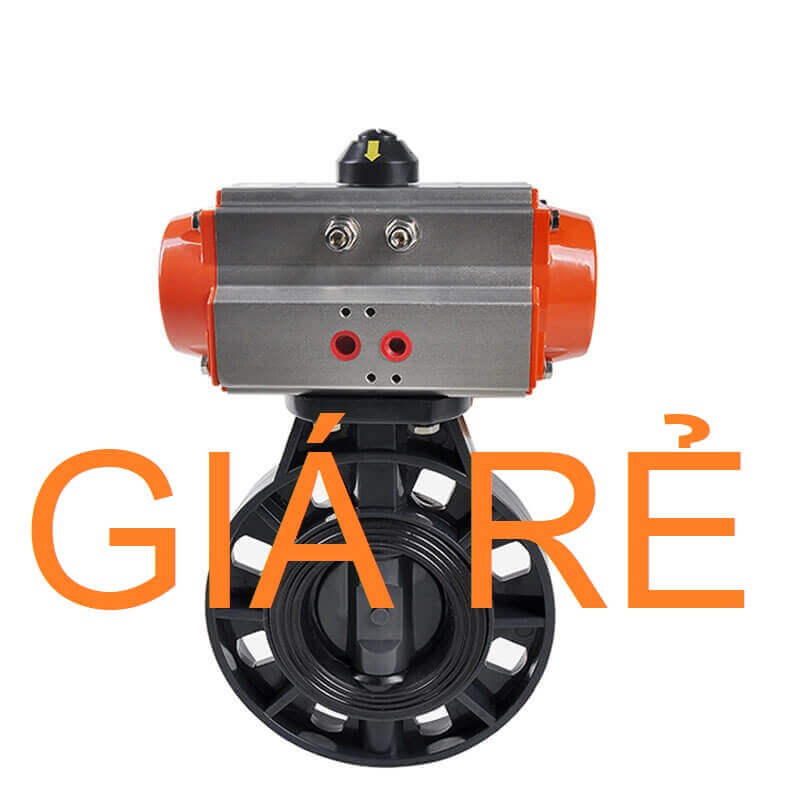
Van Bướm Nhựa Điều Khiển Khí Nén Là Gì? Cấu Tạo Và Nguyên Lý Hoạt Động của Van Bướm Nhựa Điều Khiển Khí Nén
Van bướm nhựa điều khiển khí nén hay còn gọi là van bướm thân bằng nhựa điều khiển bằng khí nén, vật liệu UPVC. Van được vận hành bằng bộ truyền động khí nén mạnh mẽ nhưng nhẹ và nhỏ gọn, cung cấp các thành phần chất lượng cao, được cung cấp ở dạng đóng/mở bằng lò xo Single Acting ( Spring-Return) hoặc tác động kép Double Acting. Van bướm nhựa điều khiển khí nén của Phát Đạt lý tưởng để kiểm soát lưu lượng trong đường ống của nhà máy bạn.
Van Bướm Nhựa Điều Khiển Khí Nén Là Gì?
Van bướm điều khiển khí nén là thiết bị kiểm soát lưu lượng hay còn gọi là một công cụ điều hướng dòng chất lỏng trong đường ống, thường được sử dụng trong các ứng dụng công nghiệp để điều chỉnh hoặc cô lập lưu lượng chất lỏng trong đường ống. Nó kết hợp van bướm với đầu điều khiển bằng khí nén, cho phép vận hành tự động. Van được đặc trưng bởi tính đơn giản, hiệu quả và tiết kiệm chi phí, khiến nó trở thành một thành phần thiết yếu trong nhiều ngành công nghiệp.

Van bướm nhựa điều khiển khí nén

Van bi nhựa điều khiển khí nén
Cấu tạo của van bướm nhựa điều khiển khí nén
Các thành phần cốt lõi của Van bướm nhựa điều khiển khí nén là đầu điều khiển bằng khí nén, thân van bướm bằng nhựa, các phụ kiện kết nối
Đầu điều khiển bằng khí nén là công cụ tạo ra chuyển động bằng cách chuyển đổi khí nén. Các bộ truyền động này thường được sử dụng trong các ngành công nghiệp để mở hoặc đóng van và các thiết bị khác. Van được kích hoạt hoạt động bằng cách chuyển đổi khí nén thành chuyển động để xoay đĩa, điều khiển việc đóng và mở. Van bướm được kích hoạt bằng khí tự động, do đó giảm nhu cầu về lao động thủ công.
Đầu khí nén được chia là 2 loại, Double Acting và Single Acting ( Spring-Return)
.webp)
Đầu khí nén của van bướm nhựa điều khiển khí nén
.webp)
Thân van bướm nhựa có cấu tạo
Thân van: Là bộ phận được chế tạo từ chất liệu chính đó là nhựa PVC, uPVC, cPVC,… có khả năng chống ăn mòn và chống oxy hóa rất tốt.
Trục van: Là bộ phận được chế tạo từ chất liệu inox, có độ bền và khả năng chịu lực khá là tốt. Bên cạnh đó, đây còn là bộ phận giúp liên kết và truyền lực tác động từ bộ điều khiển khí nén đến cánh van giúp cánh van có thể xoay chuyển với góc độ sử dụng theo yêu cầu của người vận hành.
Cánh van: Là bộ phận được thiết kế dưới dạng tròn dẹp và được đặt nằm gọn bên trong thân van bướm nhựa.
Gioăng làm kín: Là bộ phận được thiết kế lắp đặt ở xung quanh cánh van và điểm kết nối giữa van bướm nhựa điều khiển khí nén với hệ thống đường ống. Nhiệm vụ chính của gioăng làm kín đó là giúp làm kín tuyệt đối các chi tiết bên trong van bướm nhựa và cả tiếp điểm kết nối giữa van với hệ thống đường ống.

Cấu tạo van bướm nhựa điều khiển khí nén
Nguyên lý hoạt động của van bướm nhựa điều khiển khí nén
Van bướm nhựa điều khiển khí nén hoạt động như sau
Điều khiển ON/OFF
Vị trí mở van hoàn toàn : Khi đầu điều khiển bằng khí nén nhận được khí nén, nó sẽ quay trục và đĩa của van, căn chỉnh đĩa song song với dòng chảy, cho phép chất lỏng đi qua tối đa.
Vị trí đóng: Khi đầu điều khiển bằng khí nén không nhận được khí nén nữa nó sẽ xoay đĩa của van vuông góc với dòng chảy, chặn hoàn toàn đường đi.
Điều khiển tuyến tính 4-20mA : Van cũng có thể được mở một phần để điều chỉnh lưu lượng chính xác, làm cho nó phù hợp với các ứng dụng điều tiết.

Ưu điểm của van bướm nhựa điều khiển khí nén
Chúng ta hãy cùng khám phá ưu điểm chính của van bướm nhựa điều khiển khí nén và lý do tại sao nó khác biệt so với các loại van khác trong hệ thống kiểm soát chất lỏng.
Hoạt động nhanh và chính xác
Đầu điều khiển bằng khí nén cho phép đóng mở van nhanh chóng.
Kiểm soát lưu lượng chính xác đảm bảo hiệu quả hoạt động trong các hệ thống động.
Tính linh hoạt trong khả năng tương thích với chất lỏng
Một trong những ưu điểm chính của Van bướm nhựa điều khiển khí nén nằm ở khả năng tương thích với nhiều loại chất lỏng. Không giống như một số vật liệu có thể bị ăn mòn hoặc phân hủy khi tiếp xúc với một số hóa chất hoặc chất nhất định, UPVC thể hiện khả năng chống axit, kiềm và nhiều tác nhân ăn mòn tuyệt vời. Khả năng chống hóa chất vốn có này khiến Van bướm nhựa điều khiển khí nén phù hợp để xử lý các chất lỏng có tính ăn mòn trong nhiều ngành công nghiệp khác nhau, bao gồm chế biến hóa chất, xử lý nước thải và sản xuất dược phẩm.
UPVC vốn có tính trơ, nghĩa là nó không phản ứng với hầu hết các chất, đảm bảo độ tinh khiết và toàn vẹn của chất lỏng được truyền tải. Điều này khiến Van bướm nhựa điều khiển khí nén trở thành lựa chọn lý tưởng cho các ứng dụng đòi hỏi chất lượng và độ tinh khiết của sản phẩm là tối quan trọng, chẳng hạn như trong ngành thực phẩm và đồ uống hoặc môi trường phòng thí nghiệm.
Hiệu quả về chi phí và độ bền
Một ưu điểm đáng chú ý khác của Van bướm nhựa điều khiển khí nén là hiệu quả về chi phí và độ bền. UPVC là vật liệu tương đối rẻ so với các vật liệu thay thế như van bi thép không gỉ hoặc PVDF, khiến Van bướm nhựa điều khiển khí nén trở thành lựa chọn tiết kiệm cho hệ thống kiểm soát chất lỏng. Mặc dù có giá cả phải chăng, Van bướm nhựa điều khiển khí nén có độ bền và tuổi thọ ấn tượng, nhờ khả năng chống ăn mòn, mài mòn và hao mòn vốn có của UPVC.
Ngoài ra, Van bướm nhựa điều khiển khí nén cần bảo trì rất ít, giảm thời gian chết và chi phí vận hành trong suốt vòng đời của chúng. Thiết kế đơn giản và ít bộ phận cơ khí chuyển động góp phần tạo nên độ tin cậy của chúng, khiến chúng trở thành lựa chọn ưu tiên cho các ứng dụng quan trọng, nơi thời gian chết phải được giảm thiểu.
Nhẹ và dễ lắp đặt
So với van kim loại, Van bướm nhựa điều khiển khí nén nhẹ hơn đáng kể, giúp chúng dễ xử lý và lắp đặt hơn. Bản chất nhẹ này không chỉ đơn giản hóa việc vận chuyển và xử lý mà còn giảm nhu cầu về các cấu trúc hỗ trợ chịu tải nặng, giảm chi phí lắp đặt và độ phức tạp.
Van bướm nhựa điều khiển khí nén có thể được lắp đặt theo nhiều hướng khác nhau, mang lại sự linh hoạt hơn trong thiết kế và bố trí hệ thống. Cho dù được lắp theo chiều dọc, chiều ngang hay theo góc, các van này có thể thích ứng với các yêu cầu cụ thể của ứng dụng, tối ưu hóa việc sử dụng không gian và hiệu quả.
Kiểm soát lưu lượng hiệu quả
Thiết kế của Van bướm nhựa điều khiển khí nén tạo điều kiện kiểm soát lưu lượng hiệu quả trong nhiều điều kiện vận hành. Chỉ cần điều chỉnh vị trí của đĩa, người vận hành có thể điều chỉnh chính xác lưu lượng với tổn thất ma sát tối thiểu. Điều này giúp cải thiện hiệu quả năng lượng và giảm chi phí vận hành, đặc biệt là trong các hệ thống mà kiểm soát lưu lượng rất quan trọng đối với hiệu suất quy trình.
Van bướm nhựa điều khiển khí nén cung cấp khả năng truyền động nhanh và nhạy, cho phép điều chỉnh nhanh chóng theo các điều kiện quy trình thay đổi. Cho dù được vận hành thủ công hay tích hợp vào hệ thống điều khiển tự động, các van này đều cung cấp hiệu suất đáng tin cậy và kiểm soát lưu lượng chính xác, nâng cao hiệu quả và năng suất chung của hệ thống.
Giảm sụt áp
Trong các hệ thống kiểm soát chất lỏng, việc giảm thiểu sụt áp là điều cần thiết để duy trì lưu lượng tối ưu và hiệu suất hệ thống. Van bướm nhựa điều khiển khí nén vượt trội về mặt này, nhờ thiết kế hợp lý và lực cản dòng chảy thấp. Không giống như một số loại van khác có thể gây sụt áp đáng kể trên toàn bộ thân van, Van bướm nhựa điều khiển khí nén có đường dẫn dòng chảy thẳng khi mở hoàn toàn, giảm thiểu nhiễu loạn và tổn thất áp suất.
Giảm sụt áp này không chỉ giúp tăng hiệu quả hệ thống mà còn giúp duy trì hiệu suất bơm và kéo dài tuổi thọ thiết bị. Bằng cách giảm thiểu mức tiêu thụ năng lượng và giảm hao mòn các thành phần hệ thống, Van bướm nhựa điều khiển khí nén góp phần tiết kiệm chi phí tổng thể và độ tin cậy khi vận hành.
Xu hướng và đổi mới trong tương lai
Nhìn về phía trước, lĩnh vực kiểm soát chất lỏng tiếp tục phát triển, được thúc đẩy bởi những tiến bộ về vật liệu, thiết kế và công nghệ. Mặc dù Van bướm nhựa điều khiển khí nén đã mang lại nhiều lợi thế, nhưng các nỗ lực nghiên cứu và phát triển đang diễn ra tập trung vào việc nâng cao hiệu suất và mở rộng khả năng của chúng.
Tích hợp công nghệ thông minh
Một xu hướng đáng chú ý là tích hợp công nghệ thông minh vào Van bướm nhựa điều khiển khí nén để cho phép giám sát, chẩn đoán và điều khiển từ xa. Bằng cách kết hợp các cảm biến, bộ truyền động và các tính năng kết nối, các van thông minh này có thể cung cấp dữ liệu thời gian thực về trạng thái van, lưu lượng và điều kiện vận hành. Dữ liệu này có thể được tận dụng để tối ưu hóa hiệu suất hệ thống, dự đoán nhu cầu bảo trì và cải thiện hiệu quả tổng thể.
Vật liệu bền vững và thực hành thiết kế
Khi tính bền vững trở thành một cân nhắc ngày càng quan trọng trong các hệ thống kiểm soát chất lỏng, ngày càng có nhiều sự quan tâm đến việc sử dụng vật liệu thân thiện với môi trường và áp dụng các thực hành thiết kế bền vững cho Van bướm nhựa điều khiển khí nén. Điều này bao gồm việc khám phá các vật liệu thay thế có nguồn gốc từ các nguồn tái tạo, tối ưu hóa thiết kế van để tiết kiệm năng lượng và triển khai các chương trình tái chế cho van hết vòng đời.
Hiệu suất và độ tin cậy được cải thiện
Những tiến bộ liên tục trong khoa học và kỹ thuật vật liệu đang thúc đẩy những cải tiến về hiệu suất và độ tin cậy của Van bướm nhựa điều khiển khí nén. Các nhà sản xuất đang phát triển các vật liệu cải tiến với các đặc tính cơ học được cải thiện, chẳng hạn như độ bền kéo và khả năng chịu nhiệt độ tăng lên, để mở rộng phạm vi ứng dụng cho các loại van này.
Hơn nữa, những tiến bộ trong thiết kế van, chẳng hạn như hình dạng đĩa được tối ưu hóa và cơ chế làm kín, đang cải thiện hiệu suất làm kín và giảm thiểu rò rỉ, đảm bảo hoạt động đáng tin cậy ngay cả trong môi trường khắc nghiệt.
Tùy chỉnh và khả năng thích ứng
Một xu hướng mới nổi khác là tùy chỉnh và khả năng thích ứng của Van bướm nhựa điều khiển khí nén để đáp ứng các nhu cầu cụ thể của các ngành công nghiệp và ứng dụng khác nhau. Các nhà sản xuất đang cung cấp nhiều kích thước van, cấu hình và phụ kiện hơn để đáp ứng các yêu cầu xử lý chất lỏng đa dạng.
Ngoài ra, thiết kế mô-đun và các thành phần có thể hoán đổi cho nhau cho phép linh hoạt hơn trong tích hợp và bảo trì hệ thống, cho phép người dùng tùy chỉnh Van bướm nhựa điều khiển khí nén theo các thách thức vận hành riêng của họ.
Nhược điểm của van bướm nhựa điều khiển khí nén
Van bướm nhựa điều khiển khí nén có các nhược điểm
Nguy cơ hư hỏng
Khi Van bướm nhựa điều khiển khí nén mở, một bên của van phải chịu toàn bộ áp suất của chất lỏng chảy qua đường ống. Điều này khiến đĩa van thường dễ bị thủng và hư hỏng hơn.
Giới hạn nhiệt độ
Đầu khí nén của Van bướm nhựa điều khiển khí nén không phù hợp với các tình huống có nhiệt độ cao . Do đó, việc sử dụng các van này có thể dẫn đến sự cố, vì vậy hãy luôn liên hệ với nhà sản xuất để xác nhận xem bạn có thể sử dụng chúng cho nhiệt độ cao hay không.
Giới hạn áp suất
Van bướm nhựa điều khiển khí nén có đĩa mỏng. Cấu tạo cấu trúc này khiến chúng không phù hợp với áp suất lớn hơn 11 bar.
Van bướm nhựa điều khiển khí nén được lựa chọn theo tiêu chí nào khi cần mua hàng
Làm thế nào để chọn đúng van bướm nhựa điều khiển khí nén?
Việc lựa chọn van bướm nhựa điều khiển khí nénphù hợp là rất quan trọng để đảm bảo hiệu suất, độ tin cậy và hiệu quả về chi phí tối ưu trong hệ thống của bạn. Dưới đây là các yếu tố chính cần cân nhắc khi lựa chọn đúng van:
1. Hiểu các yêu cầu ứng dụng
Môi trường lưu thông: Xác định loại chất lỏng (khí, chất lỏng hoặc bùn) mà van sẽ kiểm soát. Đảm bảo vật liệu được sử dụng trong van tương thích với môi trường để ngăn ngừa ăn mòn hoặc nhiễm bẩn.
Phạm vi áp suất và nhiệt độ: Xác định điều kiện áp suất và nhiệt độ vận hành để đảm bảo van có thể chịu được chúng.
Đặc tính lưu lượng: Đánh giá xem van sẽ được sử dụng để kiểm soát bật/tắt hay điều chỉnh lưu lượng.
2. Kích thước và loại van
Phù hợp kích thước van với đường kính ống và yêu cầu lưu lượng của hệ thống.
Xem xét loại van (ví dụ: wafer, lug hoặc double-flanged) dựa trên nhu cầu lắp đặt và ứng dụng.
3. Cấu tạo của đầu điều khiển bằng khí nén
Loại truyền động: Quyết định giữa bộ truyền động tác động đơn (lò xo hồi phục) hoặc tác động kép dựa trên sở thích vận hành của bạn.
Nguồn cung cấp khí: Đảm bảo bộ truyền động tương thích với áp suất và thể tích cung cấp khí có sẵn.
4. Loại kết nối
Chọn giữa kết nối wafer, lug hoặc flanged dựa trên khả năng tương thích của hệ thống và yêu cầu lắp đặt.
5. Tùy chọn điều khiển
Phản hồi vị trí và cảm biến: Tìm bộ truyền động có hệ thống phản hồi nếu cần điều khiển chính xác hoặc giám sát hệ thống.
6. Cân nhắc về môi trường
Đảm bảo van có thể hoạt động trong các điều kiện môi trường cụ thể, chẳng hạn như tiếp xúc với chất ăn mòn, độ ẩm cao hoặc nhiệt độ khắc nghiệt.
Nếu sử dụng trong môi trường nguy hiểm, hãy chọn thiết kế chống cháy nổ hoặc an toàn nội tại.
7. Tiêu chuẩn và chứng nhận
Kiểm tra xem có tuân thủ các tiêu chuẩn công nghiệp có liên quan như API, ISO hoặc ANSI không.
.webp)
Lựa chọn van bướm nhựa điều khiển khí nén theo bảng trên
Ứng dụng của van bướm nhựa điều khiển khí nén
Ứng dụng hàng đầu của Van bướm nhựa điều khiển khí nén
Van bướm nhựa điều khiển khí nén được sử dụng rộng rãi trong nhiều ngành công nghiệp khác nhau do độ tin cậy, hiệu quả và tính linh hoạt của chúng. Các loại van này đặc biệt phù hợp để kiểm soát dòng khí, chất lỏng trong các ứng dụng khác nhau. Dưới đây là các ứng dụng hàng đầu:
1. Nhà máy xử lý nước
Được sử dụng để quản lý dòng nước trong các quy trình xử lý.
Lý tưởng cho các ứng dụng yêu cầu kiểm soát tự động, nhanh chóng.
2. Xử lý hóa chất
Kiểm soát dòng chảy của các hóa chất ăn mòn và không ăn mòn.
Được ưa chuộng vì khả năng hoạt động trong môi trường khắc nghiệt có tiếp xúc với hóa chất.
3. Hệ thống HVAC (Sưởi ấm, Thông gió và Điều hòa không khí)
Điều chỉnh luồng không khí trong các hệ thống sưởi ấm và làm mát.
Đảm bảo kiểm soát khí hậu hiệu quả trong các tòa nhà và cơ sở công nghiệp.
4. Ngành công nghiệp giấy và bột giấy
Quản lý lưu lượng nước, hóa chất và bột giấy trong các quy trình sản xuất.
Xử lý hiệu quả các vật liệu mài mòn.
5. Khai thác và luyện kim
Kiểm soát lưu lượng bùn, nước và hóa chất trong các hoạt động khai thác.
Cấu trúc chắc chắn đảm bảo hiệu suất trong điều kiện mài mòn và áp suất cao.
Van bướm nhựa điều khiển khí nén được lắp đặt như thế nào
Khi lắp đặt Van bướm nhựa điều khiển khí nén, các bạn cần có những lưu ý như sau :
Cân nhắc về môi trường
Van bướm nhựa điều khiển khí nén được ưa chuộng trong nhiều ngành công nghiệp do những ưu điểm về môi trường của chúng:
Khả năng chống hóa chất
UPVC có khả năng chống lại nhiều loại hóa chất, giúp giảm nguy cơ ô nhiễm môi trường trong trường hợp rò rỉ hoặc tràn.
Khả năng tái chế
Vật liệu UPVC có thể được tái chế, góp phần vào các nỗ lực phát triển bền vững và giảm tác động đến môi trường.
Hiệu quả năng lượng
van bướm cần ít năng lượng hơn để sản xuất so với van kim loại, do đó lượng khí thải carbon thấp hơn.
Lắp đặt và bảo trì đúng cách là điều cần thiết để tối ưu hóa hiệu suất và tuổi thọ của Van bướm nhựa điều khiển khí nén:
Đảm bảo cân chỉnh đúng cách
Cân chỉnh van đúng cách với đường ống để tránh ứng suất và đảm bảo hoạt động trơn tru.
Kiểm tra thường xuyên
Tiến hành kiểm tra thường xuyên để kiểm tra các dấu hiệu hao mòn, ăn mòn hoặc rò rỉ.
Bôi trơn
Bôi trơn thích hợp cho các bộ phận chuyển động theo khuyến nghị của nhà sản xuất để tránh ma sát và đảm bảo hoạt động trơn tru.
Sửa chữa và thay thế
Kịp thời giải quyết mọi vấn đề được phát hiện trong quá trình kiểm tra để tránh thời gian ngừng hoạt động của hệ thống và các mối nguy hiểm tiềm ẩn về an toàn.

Lắp đặt van bướm nhựa điều khiển khí nén
.webp)
Lắp đặt van bướm nhựa điều khiển khí nén
Các lỗi thường gặp của van bướm nhựa điều khiển khí nén và hướng khắc phục
Van bướm nhựa điều khiển khí nén thường gặp các lỗi
Lỗi | Nguyên nhân | Cách khắc phục |
Van không hoạt động | Nguồn điện của van điện từ đã tắt. | Bật nguồn điện. |
Van điện từ đã ngắt kết nối. | Kiểm tra lại kết nối. | |
Không khí được cung cấp cho bộ truyền động. | Cung cấp khí nén. | |
Điện áp cung cấp cho van điện từ không đúng. |
Kiểm tra điện áp bằng máy kiểm tra và cấp điện áp đúng chỉ định. | |
Điện áp đến van điện từ thấp. | ||
Chất lỏng rò rỉ từ van ngay cả khi van đã đóng hoàn toàn. | Seat van bị mòn | Thay seat mới |
Seat và bi bị trầy xước. | Thay Seat và bi mới | |
Có vật lạ trong van. | Xả vật lạ ra khỏi van bằng cách mở và đóng van nhiều lần. | |
Bu lông kết nối không được siết chặt với mô-men xoắn không thích hợp hoặc không đều. | Điều chỉnh và siết chặt lại. | |
Chất lỏng rò rỉ từ van. | O-ring bị trầy xước hoặc xoắn. | Thay O-ring mới. |
Đầu khí nén hoạt động nhưng van không mở hoặc đóng | The stem hoặc khớp joint bị hỏng. | Thay thế stem hoặc khớp mới |
Sự ăn khớp giữa thân stem và bi bị hỏng. | Thay thế sự ăn khớp bằng cái mới. | |
Các lỗi khác |
| Liên hệ Cty Phát Đạt |
Giá của van bướm nhựa điều khiển khí nén
Van bướm nhựa điều khiển khí nén có giá bao nhiêu ? Đây là câu hỏi của rất nhiều khách hàng đưa ra cho chúng tôi.
Để có giá chính xác theo từng ứng dụng của bạn. Câc bạn nên liên lạc với Phòng Kinh doanh Công ty Phát Đạt để được cập nhật giá chính xác và nhanh nhất
Mua van bướm nhựa điều khiển khí nén ở đâu ?
Khi cần mua van bướm nhựa điều khiển khí nén. Các bạn có thể xem hàng và mua trực tiếp tại văn phòng Công ty Phát Đạt. Địa chỉ 41F/96/18 Đường Đặng Thùy Trâm, P13, Q Bình Thạnh, HCM.
Các bạn ở xa thì Phát Đạt có thể giao van bướm nhựa điều khiển khí nén bằng chành xe, cpn Viettel….
Hỗ trợ giải đáp thắc mắc về van bướm nhựa điều khiển khí nén chẳng hạn như cách lắp đặt
Các bạn có thể liên lạc 24/7 vào số điện thoại của Công ty Phát Đạt